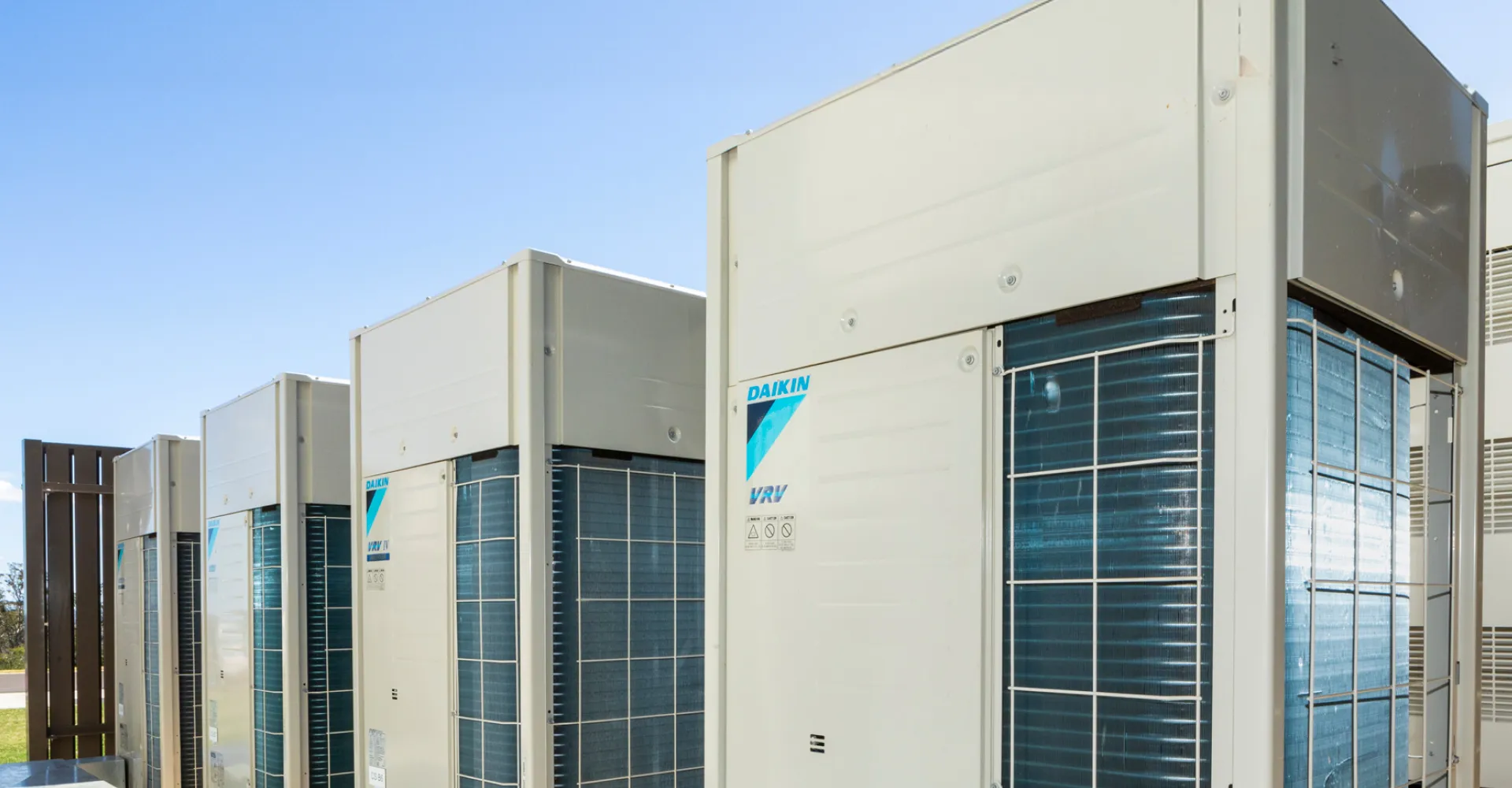
- Ten years ago developers were weighing split systems vs. centralised ducted — today VRV has become the default specification for a wide range of high-rise and multi-zone developments across South India.
-
VRV = Variable Refrigerant Volume:
One outdoor unit (or network) connects to multiple indoor units, with refrigerant flow varying based on actual demand at each zone in real time. - Four reasons developers are specifying VRV:
-
What to look for in a VRV partner:
✓ Load calculation before equipment specification
✓ Proven track record at your project scale
✓ Structured AMC capability after handover - SVAC has installed 1 Lakh+ HP of VRV systems across South India — representing one of the largest installed bases among evaluated partners.
-
Key facts:
Technology — VRV
Best for — High-rise residential, commercial, hospitality, institutional
SVAC installed — 1 Lakh+ HP
Range — Daikin 4 HP to 60 HP -
Planning a high-rise development?
Get a VRV system assessment from South India's most experienced installation partner.
Unlike a fixed-capacity system that cycles on/off, VRV modulates continuously — only using the energy required for the current load. At high-rise scale across dozens of zones, this efficiency difference is significant and measurable in utility bills.
🎯 Zoning flexibility
Hundreds of independent zones from a common circuit — a 200-apartment tower doesn't need 200 separate outdoor units on the rooftop.
⚡ Energy efficiency
Modern Daikin VRV systems achieve significantly higher efficiency under partial load — how most buildings operate most of the time.
🎨 Aesthetic integration
Cassette, wall-mounted, or concealed duct options integrate cleanly into premium interiors without visual clutter.
🔧 Maintainability
Centralised architecture allows service teams to monitor performance and schedule maintenance across the entire building from one point.